
What hosting a Madden league actually means
Hosting a Madden franchise league means running a persistent online season where every owner understands the schedule, the competitive standard, and the story of the league. It is not only opening a Connected Franchise file and inviting thirty-two people. A good host creates the operating system around the file: rules, advances, trades, team identity, owner communication, stats, disputes, replacement owners, and the weekly rhythm that keeps people checking in even when they do not have a game that night.
The leagues that last treat hosting like product management. Owners need a clear place to see standings, schedules, rosters, news, awards, streams, and transactions. Commissioners need fewer repeated questions, fewer manual reminders, and fewer arguments about what happened. A real hub turns a Madden season into a shared object everyone can follow. That is the difference between a group chat with games and a league people want to rejoin next cycle.
Define the league identity before you recruit
Before you post a recruitment message, decide what kind of football your league protects. Some leagues want strict broadcast sim rules. Some want faster advances with looser roster management. Some want realistic team building, salary cap pressure, and trade committees. None of those identities are automatically better than the others, but mixing them without saying so creates churn. Write the promise in plain language and make every rule support that promise.
A strong identity also helps you say no. If the league is built for sim owners, do not recruit people who only want to chase nano blitzes and quit after one loss. If the league is built for fast advances, do not recruit owners who can only play once a week. Your first recruiting filter should be reliability, communication, and fit. Talent matters less than owners who keep the calendar moving and respect the standard when games get tense.
Set up Discord so owners always know where to go
Discord should be organized around decisions owners make every week. Keep announcements, scheduling, trade block, rule questions, streams, complaints, and admin support separate. Pin the rulebook and advance cadence in obvious places. Use a channel naming scheme that survives staff turnover. If an owner has to ask where to post availability, where to challenge a rule, or where to find trade policy, the setup is still too dependent on commissioner memory.
Good Discord structure also prevents arguments from spreading. Disputes need a private path. Trade reviews need a clear channel and response expectation. Highlights and banter need public space so the league feels alive, but they should not bury official decisions. The best setup is boring in the right places and energetic in the right places: owners know where serious issues go, and the fun channels stay fun.
Automate stats, standings, and schedules early
Manual stat screenshots work for a week or two, then the league starts losing history. Owners want to know who leads the MVP race, which defense is climbing, what team has the next game, and who made the biggest jump after an advance. Commissioners want those answers without building a spreadsheet after every sim. Automation should start before the first season becomes dramatic, because that is when people will care most about the data.
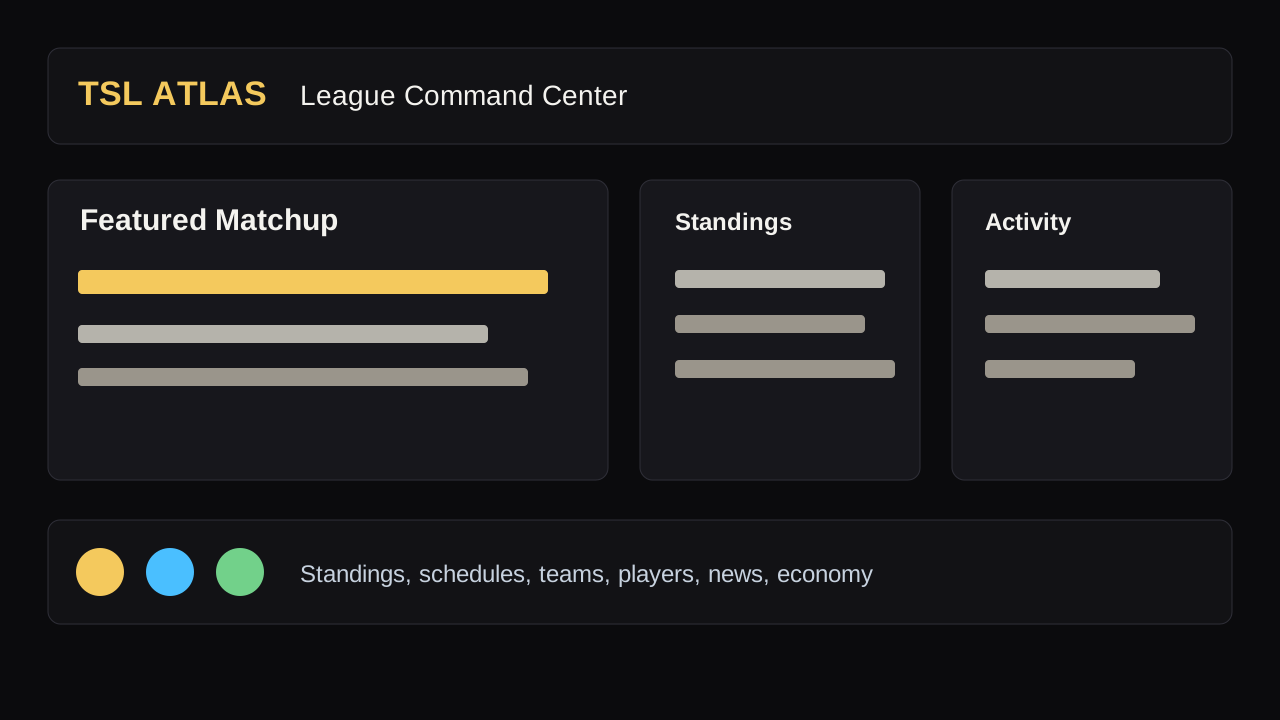
At minimum, publish standings, schedules, teams, players, stats, and transaction context somewhere stable. The website does not need to be fancy, but it needs to be current and trusted. When the league has a consistent source of truth, owners stop arguing from memory. If you do not want to build that stack yourself, the shortcut is a hosted system like ATLAS, which turns league data into public pages without making the commissioner become a web developer.
Build engagement beyond game results
A Madden league dies when the only people paying attention are the two owners scheduling a game. Engagement systems give eliminated teams and rebuilding owners a reason to stay in the room. Awards, power rankings, economy rewards, streams, weekly previews, and transaction stories help owners feel that their team still matters even after a bad start. That is especially important in long franchise cycles where only a handful of teams can win a title each season.
The key is to keep engagement connected to football. Reward owners for playing, streaming, reporting results, writing previews, and staying active. Use awards and economy hooks to highlight good behavior, not just winning. The more public recognition a league creates, the more owners feel seen. People stay where effort becomes visible.
Recruit and run season one
Season one is an onboarding test. Keep expectations simple: advance cadence, scheduling window, rule enforcement, trade policy, and communication standard. Do not launch with ten experimental features if the basics are not stable. The first cycle should prove that games get played, rules get enforced consistently, and owners trust the commissioner team. Once that foundation exists, extra systems become fun instead of chaotic.
Recruiting should be continuous. Even a full league needs a bench of waitlisted owners because churn is normal. Keep a public page for interested owners, explain what kind of league you run, and make it easy to learn before joining. A recruiting page like Join TSL works because it sets expectations before the Discord conversation starts. Owners who understand the league before they claim a team are more likely to last.
The shortcut: use ATLAS
You can run every part of a league manually, but manual work compounds. Every advance creates more stats, more standings questions, more trade context, more awards discussion, and more owner support. ATLAS exists because The Simulation League needed a single hub for those jobs. It gives commissioners public pages, league context, owner engagement, and a foundation that can grow with the league instead of depending on one tired admin.
If you are ready to host a league with a real web presence, start with ATLAS Madden league hosting. If you are still learning the operating model, use this guide as a checklist and build slowly. The goal is not to add software for its own sake. The goal is to make the league easier to trust, easier to follow, and easier to keep alive after the first burst of excitement fades.